Setting a Table Around One Silver Heirloom
Setting a table around one silver heirloom helps you choose a safe, useful place for it while keeping the meal easy to serve and comfortable for guests.
One silver heirloom can shape a table without dictating the meal. Setting a table around one silver heirloom works best when its material, condition, and role determine where it goes—not the expectation that every other piece should match.
Start with the object’s condition and material
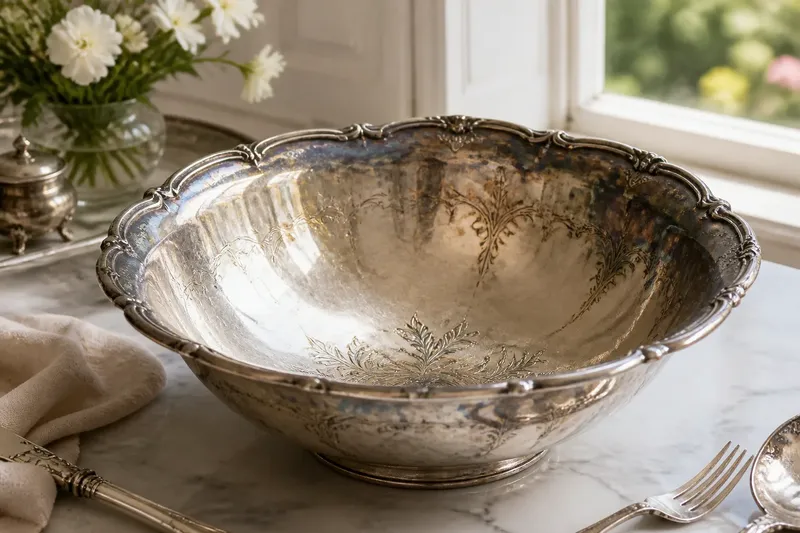
Before choosing a place, look closely at the object. A serving bowl with a stable base and a smooth interior may suit dry food, while loose joints, a sharp edge, flaking finish, or an unknown coating call for a more cautious role.
Silver-colored objects are not all made the same way. Sterling silver, silver plate, and pieces with lacquer or decorative treatments can require different care; if you cannot identify the material or finish, check a maker’s mark and consult a qualified silver-care professional before using it with food or cleaning it.
Give the silver a job that fits the meal
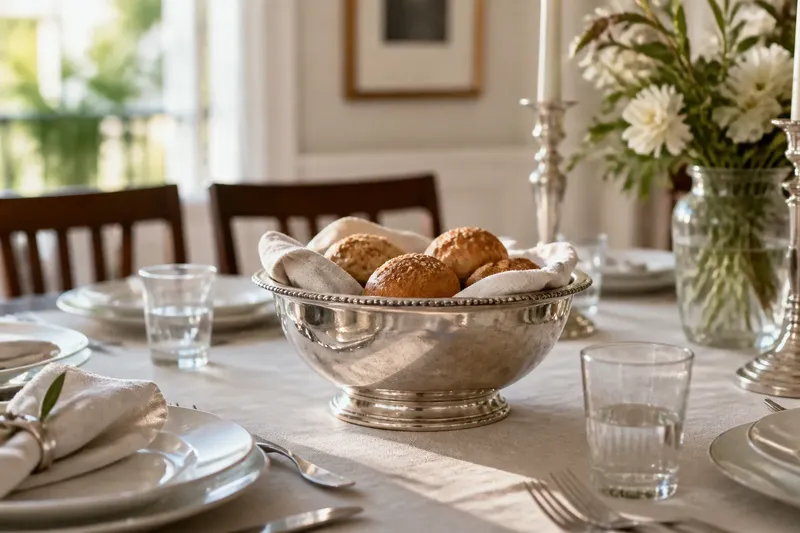
A serving piece feels at ease when its shape answers a practical need. A low bowl can hold rolls, while a small tray might carry wrapped candies; a candlestick, by contrast, is better treated as a stationary object, away from sleeves and serving traffic.
Imagine Mara has a silver bowl with a shallow dent and a smooth, clean interior, but no documentation about its finish. She decides not to put food directly in it; instead, she sets a folded linen napkin inside and places wrapped bread on top. The napkin separates the food from the metal, and the bowl remains easy to pass without making its uncertain finish a guest’s concern.
Arrange the table around movement, not symmetry
Place a serving object where someone can lift and pass it without reaching across another diner’s plate. Leave clear room for serving dishes and glasses, and keep tall pieces outside the main sightline so people can speak across the table.
Build the rest of the setting from familiar objects: ceramic plates, glass tumblers, and stainless-steel flatware are enough. A plain cloth or linen napkin can give a reflective surface some visual space, but matching silverware is unnecessary; the table works when each item has a clear place and purpose.
Small checks lead to practical choices
- Inspect the rim and interior. If either has a sharp edge, residue, or flaking finish, keep the piece out of food service and use a stable, non-contact display position instead.
- Check the base. If the object rocks or wobbles on the table, do not use it for serving; choose a flat, protected spot away from elbows.
- Identify the finish. If a maker’s mark or care information confirms food-safe use, follow that guidance; if the finish remains uncertain, use a liner or keep food separate and seek qualified advice.
- Test the route for passing. If a diner must reach over another person or a hot dish, move the silver closer to the person who will serve or choose a less busy position.
- Check the sightline. If a tall object blocks conversation across the table, move it to an end or side position; if it is low and stable, it may sit among the dishes.
- Review the surrounding clutter. If patterned linens or decorations hide the object’s outline, remove one nearby accent; if the setting already feels calm, leave it as it is.
What do guests need to know?
Does the tableware need to match?
No. Ceramic plates, glassware, and stainless-steel flatware can sit naturally beside a single silver object when the pieces have practical roles. Matching silver is a choice, not a condition for a coherent table.
Should a silver heirloom hold food?
Only if its condition and finish are suitable for that use. When material or care instructions are uncertain, keep food separate with an appropriate liner or use the object as a non-contact accent until a qualified professional can advise you.
Where should a serving piece go?
Put it within easy reach of the people who will pass or serve it, leaving clear space around plates and glasses. If its height interrupts conversation, shift it toward the side or end of the table.
How can its history enter the meal?
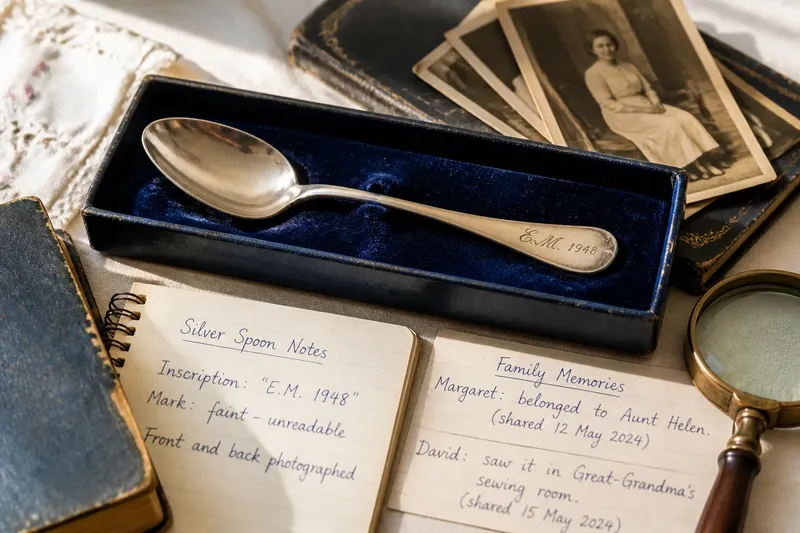
Offer one concise detail if it feels welcome, such as who owned it or when it was usually used. Then let guests respond—or continue the conversation without asking them to treat the piece as a centerpiece.
Let the meal set the scale of attention
A table is not a display case, and an heirloom need not carry the whole gathering’s meaning. Setting a table around one silver heirloom means deciding what it can safely do, giving it space to do that, and leaving the rest of the meal pleasantly ordinary.
After the meal, follow the care guidance for the object rather than assuming that every silver finish can be washed or polished the same way. A useful place at the table begins with respect for the material; that small distinction lets the heirloom participate without asking it to perform.